Are You Pulling the Wool Over Your Own Eyes?
Guest Girlie Blogger Nicole Capobianco spills the truth about sheep, shearing, and why it’s time to ditch the itch for good;
Every year around this time, when fall and winter fashions make their way into our field of vision, I inevitably find myself in a conversation with an otherwise ethical person about the wool industry. Most recently I found myself in an online debate with a woman who claimed that she was a dedicated vegan despite the fact that she uses wool and insisted that the vegan community was misguided in our stance against it.
Sadly, wool often slips under the ethical radar. In fact, at one time I was a confused (and itchy!) wool wearing girl myself. While I had long abandoned leather and fur and eagerly embraced a plant based diet, I didn’t really understand what was so wrong with wearing wool. It’s something that seemed to grow naturally and effortlessly and I was always under the impression that shearing was for the sheep’s own benefit. What harm was caused in borrowing some fluff from our sweet little friends for the sake of a fabulous winter cape? It will grow back anyway, right?

Oh sisters, let me tell you…..the cold, hard truth about the wool industry is even uglier and creepier than that snowman sweater grandma made you last winter.
Here’s why:
The only reason why sheep “need” to be sheared is because we bred them that way. According to VeganPeace.org, wild sheep in their natural existence don’t need to be sheared. In fact, they intelligently produce just enough wool to protect themselves in the winter months, which then gradually thins out to stay cool and comfy come summertime. The domestication of sheep for the wool industry has resulted in the need to shear because these sheep have been specifically bred to grow overly thick and heavy coats. Merino sheep for example, often die of heat exhaustion during the brutal summer months. To deal with the side effects of unnaturally long and thick coats, which include the infestation of maggots buried deep into their skin that literally eat them alive, ranchers perform an operation known as Mulesing. Large chunks of flesh are ripped off the backs of lambs and around their tails with no anesthesia.

Shearing causes sheep to suffer. If you think that the shearing process provides relief and comfort for the animals, think again. According to The Vegan Society, shearers are often paid by volume, not by the hour, which results in little to no regard for their well being. In fact, the encouragement of fast work causes more pain and anguish for the sheep. Says one eyewitness: “[T]he shearing shed must be one of the worst places in the world for cruelty to animals … I have seen shearers punch sheep with their shears or their fists until the sheep’s nose bled. I have seen sheep with half their faces shorn off.”
Purchasing wool sentences sheep to death. Although there seems to be widespread belief that wool sheep live a long life on a sprawling pasture, this simply isn’t their reality. If a sheep manages to survive their horrendous living conditions, they are inevitably scheduled for slaughter. Once a sheep ceases to produce the amount of wool needed for ranchers to profit, they undergo a long and painful export to a rendering plant. After being released from tightly packed holding pens, the sheep often travel up to 50 hours at a time without food or water. If they survive this ordeal, the final destination is typically a country with minimal slaughter regulations, where animals often regain consciousness while being dismembered. In the Middle East for example, sheep undergo a “death march.” Reuters reported in 2002 that 14,500 sheep died from heat exhaustion while traveling to the Middle East. The “downers” were simply thrown overboard.

The wool industry causes collateral damage. Female sheep often give birth either in their tightly packed holding pen, or en route to their deaths. The newborn lambs are typically trampled to death within hours of their arrival. But other wildlife is affected as well. In the US coyotes are routinely destroyed due to their hunting of sheep and other livestock, while the Australian government allows landowners the freedom to kill kangaroos who act as “pests.”
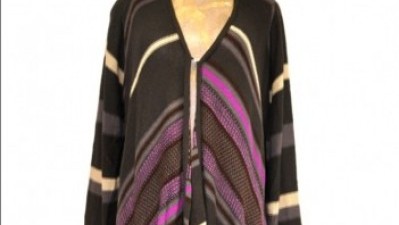
So now that you know why we veggies shun sheep fluff, you may be wondering what’s a compassionate girl to do come fall and winter? Making the transition away from wool to more ethically friendly fashions is a lot easier than you may think. There are so many beautiful, sustainable, breathable, and skin friendly options to choose from. Say “Oh, hooray!” to cotton, cotton flannel, polyester fleece, Tencel, and bamboo. If you’re feeling extra eco friendly, look for Polartec Windpro, which is made primarily from recycled plastic soda bottles yet feels like a second skin.
Still straddling the fence? Allow me to share the turning point in my personal journey towards a cruelty free existence. About three years ago, my cat Sparkle became friends with a little lamb named Rocky that had been rescued from a freeway where he had most likely fallen out of a transport truck.

As I watched the two playfully chase each other around in the sunshine, it struck me how synergistically they felt happiness and peace, how they were sharing an experience of pure joy. I felt compelled at that moment to do my part to ensure that ALL animals have the freedom to live for their own reasons, and not for the sake of my sweater.
Born and raised in NYC, Nicole Capobianco is a sales executive by day, animal rescuer by night, and overall loudmouth on a mission to raise awareness about compassionate and ethical living for the glamorous girl with a conscience.


[...] ***The GirlieGirl Army*** » Blog Archive » Are You Pulling the Wool Over Your Own Eyes? girliegirlarmy.com/blog/20091207/are-you-pulling-the-wool-over-your-own-eyes – view page – cached Here Guest Girlie Blogger Nicole Capobianco spills the truth about sheep, shearing, and why it’s time to ditch the itch for good’; [...]
(12.07.2009 3:01 pm)Wonderful article, I love the lambies and am happy, cozy, and comfy being wool free ;)
(12.07.2009 3:48 pm)Thanks Michele for forwarding this article!!! It is very informative!!
(12.07.2009 4:10 pm)Very informative and well written article, Nicole. Thank you for sharing all that information. I truly had no idea that wool is so inhumane.
(12.07.2009 4:35 pm)Ugh. Makes me look at at my angora wool sweater in a completely different light! This was a really enlightening, yet disturbing article. It’s amazing the things that go on in the process of making wool that the general public’s not aware of! Kudos!
(12.07.2009 5:18 pm)Oh Wow! I never knew that a Lamb goes through that process. Its definitely a wake up call, thanks for the information and well written as well. :)
(12.07.2009 5:23 pm)Social comments and analytics for this post…
This post was mentioned on Twitter by LindaRivasLeyva: RT @GirlieGirlArmy: The truth about sheep, shearing, and why it’s time to ditch the itch for good: http://tinyurl.com/yhbmhcz...
(12.07.2009 6:25 pm)This is quite an eye-opener; it debunks quite a few myths the industry has put out there for the “comfort” of consumers and the fashion industry. The logic with which the argument against wool is presented here is very compelling; I, for one, won’t be wearing it anymore. “Mary” had it right: those sweet little lambs should be pets only.
(12.07.2009 6:30 pm)Pretty sure you’re referring to me; did you read my own blog on the same issue? Let’s chat on BOTH blogs….
Mine is titled, “Wool, Our Eyes, and “Truth’”
I think you’ll find there’s a lot to discuss here, and both of us have only scratched the surface.
(12.07.2009 6:38 pm)There are a lot of wool “farms” that are very good to their sheep and treat them as pets. No kill sanctuary type places that sell wool for knitting etc. http://www.homesteadwoolandgiftfarm.com/ for example - check it out! Large scale production is never a good idea for any animal regardless of its purpose because it is greed/money driven and the welfare of the animal is never considered. Let’s not get all crazy, not all wool is bad.
(12.07.2009 10:03 pm)What a wonderful article! I’m forwarding to friends~ I’m proud to be wool free for 25 years now & proud to be friends with the author Nicole Capobianco!!
(12.07.2009 10:36 pm)Amazing:)Good Job, Nicole!
(12.07.2009 11:02 pm)Omgd! Those little baby lambs are so freakin’ adorable! :D
(12.08.2009 12:10 am)Finally! As a somewhat new vegan (about a year or so) I knew this was going to be a big lifestyle change, so my first focus was on how I could change my eating habits..and I am now at the point where I am interested in taking a better look at some other ways I can lead a more compassionate life. THANKS FOR THIS GREAT ARTICLE. Obviously we all know about the fur and leather, but I was curious about wool so thank you thank you thank you!!
(12.08.2009 12:28 am)Finally! As a somewhat new vegan (about a year or so) I knew this was going to be a big lifestyle change, so my first focus was on how I could change my eating habits..and I am now at the point where I am interested in taking a better look at some other ways I can lead a more compassionate life. THANKS FOR THIS GREAT ARTICLE. Obviously we all know about the fur and leather, but I was curious about wool so thank you thank you thank you!! Good job Nicole! Informative and fun style of writing
(12.08.2009 12:30 am)What an amazing and informative piece that gives a voice to those that don’t have one. This was truly an eye-opener, my dear friend. I will gladly say “Oh hooray” to the other fabrics. =)
(12.08.2009 12:48 am)Great article! Where can a fashion forward vegan find suitable cold weather-wear? What fabrics are best?
(12.08.2009 1:57 am)Ccretter- I understand what you are saying from a “welfare perspective” and in theory I agree that it is vastly better than large scale production for sure, and at no kill sanctuaries in particular the sheep already have overproduced their wool from years of abuse/breeding…. Unfortunately, 1) the HUGE majority of wool comes from the type of places mentioned above and NOT no kill sanctuaries 2)It is diffcult to get an accurate source from most wool materials, making ethical buying difficult for the average consumer with limited resources and 3) I have first hand rescued animals from so called “free range, cruelty free” farms and sadly often times the animals are treated only marginally better. There is also the idea from (my) vegan standpoint that the absence of animal materials signifies the belief that they aren’t here to be used for our purposes, even if we treat them really nicely before we shear/eat them. So that’s what all the “craziness” ;-) is about from my point of view. Again, it’s a belief that either you subscribe to or not, so each individual views it differently. Thanks so much for the link!!
Rachael: If you shop online, I really like http://www.alternativeoutfitters.com for winter coats that are affordable and adorable. The fabrics mentioned above can be found in a lot of sporting goods stores that are (finally!!) making trendier ski jackets and puffers.
(12.08.2009 6:54 am)This is a Very informative article. I still think a lot of people are missing the point when they say the animals are not harmed. The whole purpose of this article, in my opinion is to show that these animals are being taken from their natural habitat and being exploited for our own selfish reasons. So if I rob a human being of his possessions but I do it in a polite manner, which causes no harm, does that mean its ok? I know people are going to say that we use it to keep warm and offer other points of views, but I also believe the writer offered many different alternatives that don’t involve the exploitation of animals. Animals need a voice and I heard it loud and clear. Thank you for opening my eyes.
(12.08.2009 6:56 am)Great Article. If every eco-article was this witty and informative we’d wake up tomorrow to a whole new world.
(12.08.2009 10:21 am)A truly informative and eye-opening article, thank you!
What about family-owned and operated farms and alternatives to wool? My family has an alpaca farm, where the animals live freely and are well-loved. My dad also does all the shearing on the farm (as well as volunteers his time at other area farms because he likes shearing, not because he’s paid!). The animals are comforted while being shorn and they hop off the table to show themselves off to the others.
James P., I understand this doesn’t address your point and the point that was made to that end in the article and trust that the point is well-taken. My parents got into alpaca ranching because the animals are not part of the food chain here. They are eaten in South America though. So, perhaps supporting local farms that you can visit and see how they operate is the better way to go?
(12.08.2009 10:24 am)Danielle, it sounds like you have a wonderful, loving family :-) Personally, and I can only speak for myself here, I firmly believe that animals should not being used for clothing, makeup, food, etc no matter how nicely they are treated while in confinement. That said, if all farms were run the way your family’s operates, I would at least sleep a lot better at night knowing that the animals are not being abused. Still, ideally I would eventually love to see them in their wild habitat, as part of their natural existence, free to do as they please. At this point though, there is such a long standing and widespread misuse of animals that the ideal picture I have in my mind seems quite a distance away. In regards to supporting local farms and visiting them…all I can say is that it’s a nice sentiment for sure, but impractical for most. Also, the vast majority of wool used in clothing (I am thinking of mass distribution here) comes from completely unregulated and bloody origins. So for the sake of the majority, I would have to say abstaining from the fluff is the most impactfull (is that even a word?) option for all.
(12.08.2009 12:57 pm)Very interesting and revealing article about an industry that often goes overlooked in the quest for eco-consciousness. Brava, Nicole! Thank you for your insights and for making us all think twice about how our decisions impact the living world around us.
(12.08.2009 4:06 pm)Very well written and informative. While I still believe that there are ethical ways in which to use animals and their products, I am always appalled by the gratuitous cruelty revealed by articles like this. It’s realy time to put an end to this cruelty and abuse and articles like this help toward that end.
Let’s remember that when God created us He put us in a garden where we would live in peace and harmony with the animals of the world, over whom He gave us dominion.
(12.08.2009 5:35 pm)Well written, thought-out and presented. I really had no idea! Great job Nicole, keep up the informative and enlightening work.
(12.08.2009 7:37 pm)Wow, I didn’t know the horrible conditions that sheep are put through in regards to making wool clothing. Definetely an eye opener. Thanks for for the information and giving alternatives in place of wearing wool clothing.
(12.13.2009 5:23 pm)You truly yanked at my heart strings with the photos. Well written blog piece. Very informative but also fiesty. :)
(12.13.2009 8:10 pm)Dear Ccretter:
You are a melodramatic imbecile
Apart form the unctuous, condescending tone of your “Let’s not get all crazy here” quip, there are painfully obvious and fundamental holes in your argument. The author has reviewed them above and I won’t repeat her, but they’re of the variety that should be conspicuous to children, and your obliviousness to them makes your condescention all the more pathetic - something which I intuit you haven’t noticed either.
Human beings, while determining ourselves to be “superior” to animals, are the only creatures on the planet who fail to maintain the miraculous equilibrium of our natural system, and are currently making a vigorous, concerted effort to commit mass-suicide. These are not the strongest accolades to our credentials as administrators of other forms of life - whether or not some of us treat them humanely.
Some house-slaves were kept in good conditions, and even liked by their masters, but this is no justification for slavery. The standard rationale for treating animals in ways that we recognize to be reprehensible when applied to human beings is that animals are “lower” forms of intelligence, and their lesser brian-capacity justifies our exploitation. Should the mentally handicapped, and victims of brain trauma whose cognitive capacities are reduced to those of animals then have no rights, and be exploited? Would we call the defense of these persons rights “gett(ing) all crazy”? You might - because you’re a dunce. What kind of name is Ccretter anyway? Get a real name.
ps. you dunce
(12.14.2009 3:07 am)Argh - what an eye opener….
Hopefully we’ll have more clothes made from hemp soon.
(12.16.2009 2:11 pm)Plants are living feeling beings! You think you can exploit plants, eat their offspring, mutilate them because you are superior to them? What kind of ethical stance is that?
(06.30.2010 7:14 am)