
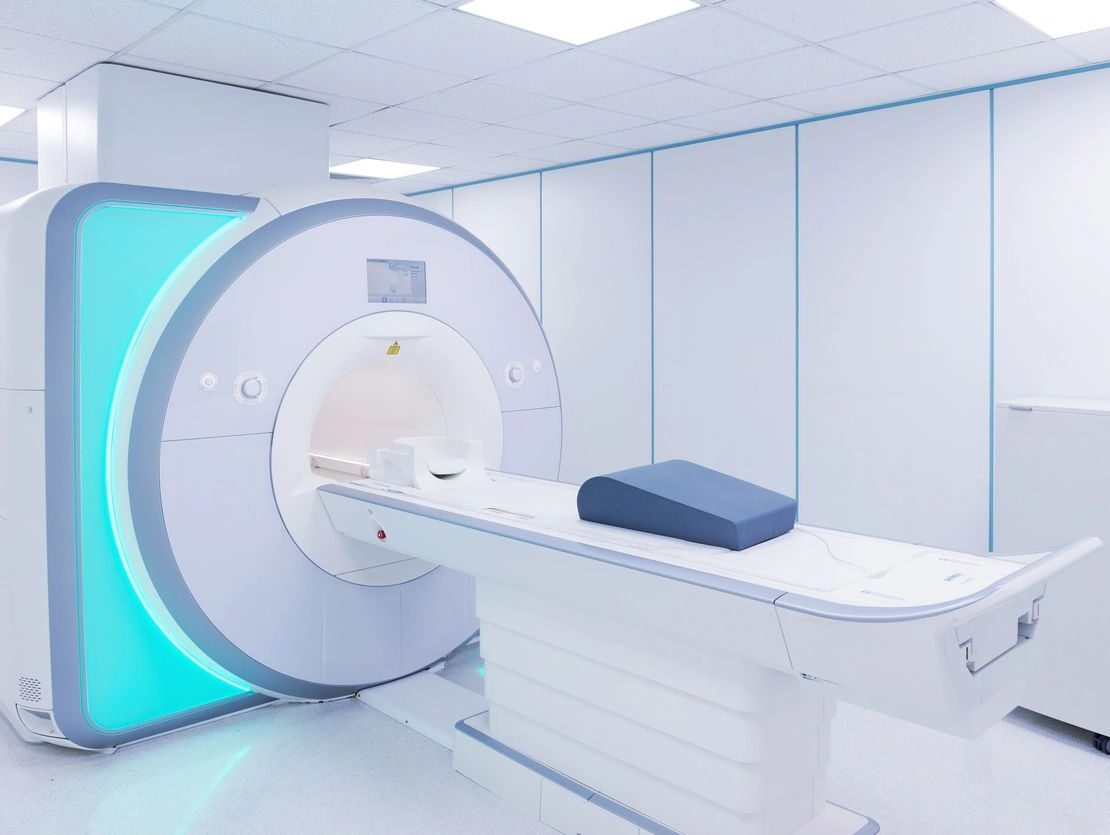

I have so many friends who have done the $2,500 Prenuvo full-body scan — often hoping for the ultimate peace of mind — only to end up scared out of their minds over some tiny, probably meaningless finding that suddenly requires another scan, another appointment, another opinion, and months of worrying.
Which made me wonder: Is any of this actually worth it? And if you’re already an anxious person, could knowing more actually make you feel — and fare — worse?
Right now, social media is flooded with commercial health companies selling expensive full-body scans to otherwise healthy people with an incredibly seductive promise: catch cancer, or another serious disease, before it catches you. It sounds like the pinnacle of proactive medicine. But the medical reality is considerably more complicated. More testing does not automatically mean better medicine — and sometimes, looking for everything means finding things you would have been better off never finding at all.
So how do you separate the cancer screenings that have actually been proven to save lives from the shiny, high-tech tests that may simply buy you more anxiety?
I asked prominent oncologist Dr. Avishek Kumar to break down what the evidence actually says — what we should be screening for, what we probably shouldn’t be, and where our health dollars are best spent. Here’s what he said;
Full-body scans sound like a great idea.
Scan everything. Find cancer early. Catch it before it becomes a problem.
Who wouldn’t want that?
But there is a catch. Finding more things does not always mean saving more lives.
As an oncologist, I see what happens after an abnormal scan. A tiny lung nodule. A liver cyst. A thyroid spot. Most turn out to be harmless.
The problem is that once you find something, you usually have to do something about it.
That can mean repeat scans, specialist visits, biopsies and weeks of anxiety. Sometimes people end up having invasive procedures for something that never would have harmed them.
A $2,500 scan can turn a healthy person into a patient overnight.
That is why I tell people something that sounds almost too simple:
The boring cancer screenings are the ones that save lives.
For average-risk adults, colorectal cancer screening should begin at 45. That can mean a colonoscopy, but it can also mean stool-based testing for the right patient.
Women at average risk should start mammography at 40.
Cervical cancer screening remains important and may involve HPV testing, a Pap test or both, depending on age and history.
And yes, CT scans do have a proven role in screening. Annual low-dose CT scans can save lives in people at high risk for lung cancer because of their smoking history.
What you will notice is that none of these recommendations says: scan the entire body just in case.
Good screening is targeted.
Your age matters. Your sex matters. Your smoking history matters. Your family history matters. Genetics matter.
A 45-year-old with no major risk factors does not need the same screening plan as someone whose mother and sister both developed cancer at young ages.
Another example is prostate cancer screening. PSA testing can be useful, but it is not as simple as “everyone should get it.” It can also lead to false alarms and the diagnosis of cancers that might never have caused harm. For many men, the right move is a conversation with their doctor about their personal risk.
There is another thing patients tell me all the time:
“I feel fine. Why do I need screening?”
Because feeling fine is the point.
Screening is for people who do not have symptoms yet.
Once you have unexplained bleeding, a new lump, persistent cough, unexplained weight loss or another concerning symptom, that is no longer screening. That is a diagnostic workup.
There is also no screening test that gives you a free pass.
A normal mammogram or colonoscopy does not mean you should ignore a new symptom six months later. If something changes, get it checked.
So before you spend thousands of dollars on a commercial full-body scan, ask one question:
Has this test actually been shown to help people like me live longer?
That is the standard that matters.
Not how advanced the machine looks.
Not how impressive the marketing sounds.
Not how many abnormalities it can find.
Cancer screening works best when we use the right test, in the right person, at the right time.
More testing is not always better medicine.
Sometimes it is just more testing.
Dr. Avishek Kumar is a board-certified medical oncologist based in Edison, NJ (NYC metro). He focuses on modern, evidence-based cancer treatment, second opinions, and infusion therapies. He also serves as a Lieutenant Colonel in the U.S. Air Force Reserve as a flight surgeon. He has deployed overseas and regularly flies on fighter aircraft in support of operational missions, bringing a high-performance, mission-driven mindset to medicine and leadership.